

Hey. How's it going?
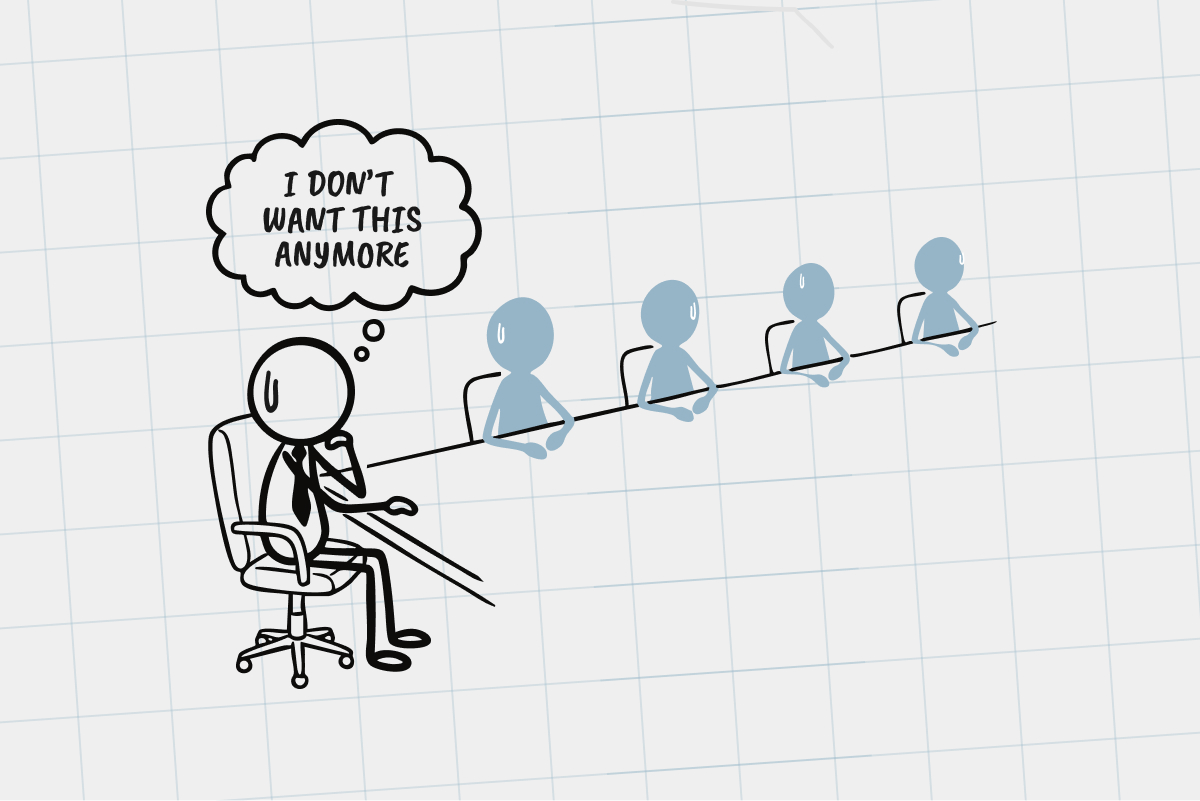
No, really. Don't give me the BS version you'd give your mom. How's it actually going compared to where you thought you'd be when the year started?
Take a moment to sit with that question, because most founders can't answer it. Not because the year has gone badly, but because they've never stopped long enough to look. At some point the year just starts happening to you with one quarter bleeding into the next, and somewhere around now it's half gone and you never saw it go by.
Here's the thing. If you're going to go through the emotional toil of building a business, including the stress, the sacrifice, the years you can't get back… you sure as hell should know what you're doing it for.
Most founders let the business decide what their life looks like. The ones who don't start with a different question: what life am I building this for?
We often lose sight of this. So, this month we're talking about the mid-year review nobody runs.
Strategy is the how. But you never picked the where or the why.
Ask a founder for their strategy and you'll get pages of notes. Ask them to describe where they want this business to be in three years and why they want it to look like that, and you'll get silence. You've got a thousand plans but no picture of the future. You're working tirelessly toward a destination you never actually chose.
If we're honest, most of us are good at getting things done, but less practiced at pausing to notice if what we're getting is what we actually wanted.
Some of the most interesting moments in my work are when a founder who's dead set on selling gets deep into prepping the business for sale, and somewhere in the middle realizes they don't actually want to sell. What they want is to step back, get the business running on autopilot, throwing off cash, and hold it as a generational asset. Selling is just one kind of exit, and often it's not the one they were after. They'd just never let themselves picture another. And the only reason they caught it was because the prep forced them to stop and reassess. Most of us never get that push.
.jpg)
There's a reason this keeps getting missed
We've built rituals for the edges of the year and nothing for the middle. January gets the fresh annual plan and the big beautiful resolutions. December gets the year-end reviews. The smart operator throws in a quarterly session here and there. But nothing in the calendar tells you to stop and honestly check whether you're heading somewhere you actually want to end up. So you just measure the stuff you did, instead of asking whether it moved you any closer to the life you actually want.
Your outputs are not your outcome
Revenue, headcount, and quarterly pipeline are those outputs. They are useful, measurable, and yet… still not the point. The outcome is what all of it is supposed to be buying you, and it's almost always some version of a life, and a business at a particular stage.
A business, like life, has its seasons. You're in one right now, and you need to take a beat to figure out which one. Sometimes you just look up one day and the season has changed.
Most founders never take a beat to appreciate the season they're in, let alone the one they're moving toward. They just keep grinding, with no idea whether the work is carrying them anywhere they’d have chosen on purpose.
And for a lot of founders, if they're honest with themselves, the next stage is some version of stepping back. A smaller role maybe.
A business that runs without you in the room. Possibly an exit on your own terms instead of one forced by burnout. None of that happens by accident, and it definitely doesn't happen in a business that still needs you for everything. You have to aim at it and build toward it, the same way you built this thing from scratch.
Do the Review
Take an hour this week somewhere quiet and answer the following.
Start with life, then fit the business into it.
- Describe an ordinary Tuesday three years from now. I’m not talking about the business metrics, I’m talking about your actual day. When do you wake up, what are you spending your time on, who's around you, and how do you feel at the end of it?
- Now fit the business into it. What's your role, how much of your time does it take, how much is it paying you, and who's running the parts you're not? And name the season you're actually in right now: still building, holding steady, or ready to start stepping back?
- How far is that from what you're doing today?
If the answers come quickly, you're in better shape than most. If you stall, trust me, you're not alone. Take some time to untangle that. You can't review your way toward a place you've never let yourself describe.
Then look back at January. What did you say this year was going to be about? Is what you did aligned with where you want to go, or is there a gap? Did the work bring you energy or did it take it away? See any patterns?
The second half is for correcting, not grinding
If the review shows a gap, the instinct is generally to attack it by doing more. Resist that drive. The thing that actually closes a gap is usually small and takes more guts than effort. It's usually one correction, change or decision you've been too scared to make.
The back half of the year isn't for grinding harder. It's for changing one thing on purpose.
So, what's the one correction you're willing to make in the next 30 days?
One last thing
This is the work I actually do. The founders who get to choose their next stage, who get to step back or sell on their own terms, are almost never the ones still making every call. They're the ones who spent a year quietly building a business that didn't need them in the room. If you've read this far and you're realizing the gap between where you are and where you want to be is bigger than a quarter can close, that's exactly the kind of conversation worth having. Drop us a line.
So I'll ask you again:
How's it going, compared to where you thought you'd be? And is where you're headed still somewhere you want to end up?


.svg)


