

The Competence Trap: Why Your Greatest Strength Is Limiting Your Company’s Value
The skill that built your business is now the thing holding it back. How the competence trap quietly erodes your company’s value.
It’s true, I can’t fly and I’m not that strong. But that’s okay because my superpower has always been my ability to make decisions fast, especially when things are unclear.
Tough call? I’d cut through the noise to move us forward. For a long time, this superpower helped me win. So, when I met a founder who had the same gift, I recognized it immediately.
But then I sat in on one of their leadership meetings where that founder wasn’t present. The team had an agenda, context, and authority on paper. And for forty-five minutes, almost nothing got decided.
The team had the skills and knowledge. But every time a real decision came up, someone said some version of "let's table this until we can run it by [founder]."
This was one of the sharpest operators I’d ever met. And that sharpness was the exact thing holding the company back.
The Skill That Becomes the Ceiling: Why Leadership Depth Matters
In behavioral psychology, there's a pattern called the competence trap.
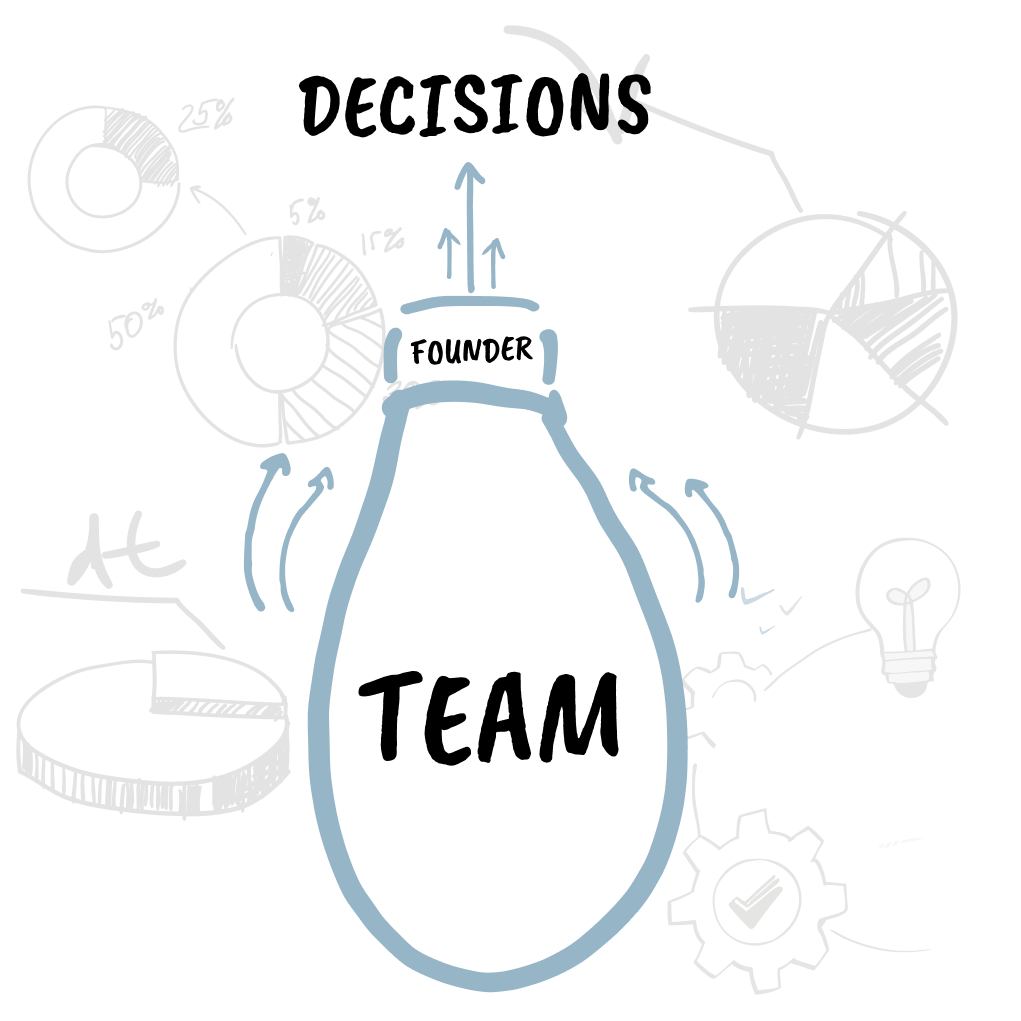
The better you are at something, the more you do it. The more you do it, the less anyone around you develops that muscle. The less they develop, the more they need you. And the cycle reinforces itself until the entire system depends on one person.
For early-stage founders, this is often necessary. You need speed and strong judgment. The founder stepping in is what’s required for survival. And your team often adapts around this.
But what works at a million in revenue doesn’t often work at fifteen or twenty. And the problem is that what started as strong leadership starts to look like founder dependence from the outside.
If you asked your leadership team, of the ten most common decisions they escalate to you, how many could they make on their own if you weren't there? The most common answer is between 1-3.
The Illusion of Delegation and Owner Dependence
Here's what makes it tough. Most founders I talk to genuinely think they’ve already solved this.
They’ve hired well. Promoted people. Built out the org chart with real titles, responsibilities, and reporting lines. So on paper, it all looks good.
But there's a big difference between giving someone a title and giving them actual authority. Psychologists call this the illusion of delegation. The structure says "this person owns the decision." The culture of the company says "but run it by the founder first."
They just don't feel safe making a decision without checking in with you first.
And that gap between the org chart and the actual power structure is one of the first things that gets exposed when your business is under any real scrutiny.
The Other Side of the Trap
There's another related concept called learned helplessness. It shows up everywhere in organizations.
When people learn over time that their input doesn’t change the outcome, they stop trying. It’s not like they push back, they just don’t take initiative. They wait to be told what to do because it’s safer. And honestly, it makes sense. The system taught them their judgment doesn’t really matter.
Every time a founder steps in and overrides a decision or quietly re-does someone's work, the message is the same: “your call wasn't good enough”. Do it enough times over enough years and even your strongest people will stop trying.
I've seen this with genuinely talented people who were serious decision makers at previous companies. Then they join a team with a founder like this, and within six months they're asking permission for things they used to handle without thinking.
The founder looks at that and thinks they have a people problem. But really, it’s a conditioning problem.
Breaking this conditioning is damn hard. You have to let the team make decisions you disagree with and live with the outcome. You have to watch someone choose option B when you would have chosen option A, and resist the urge to step in. You gotta let’em possibly F up.
Things will temporarily feel worse before they feel better. Some founders push through it and come out the other side with a team that operates independently. Others step back in at the first mistake and the cycle resets. The difference usually comes down to whether someone else is in the room redirecting those escalations before they reach you. That’s a big part of what we do at Switch. We step in and build an operating rhythm that allows the team to build the muscle.
A System Problem, Not a People Problem: What This Means for Your Business Valuation
The founder I mentioned earlier wasn’t doing anything wrong. Neither was the team. They were both operating inside a system that had calcified over years, one decision at a time.
The good news is that the competence trap isn’t a character flaw, it’s a pattern. And patterns can be broken once you see them clearly enough to do something about it.
If you’re wondering how deep the trap goes in your own business, start with that question from earlier. Ask your team which decisions they’d make without you. And if the answer makes you uncomfortable, drop us a line. This is exactly the kind of thing we help founders work through.



.svg)


